Here is another resource for you to access with your child. Link: CNN/Sesame Street racism town hall. (The video links below may or may not work!)
Watch the entire CNN/Sesame Street racism town hall
By Alex Chaet, CNN
Updated 12:00 PM ET, Sat June 6, 2020
(CNN)CNN's Van Jones and Erica Hill partner with "Sesame Street" for Coming Together: Standing Up to Racism, a town hall for kids and families. Watch the town hall in its entirety below:
How to explain racism to kids
Part 1: Entire CNN/Sesame Street town hall on racism21:28
Atlanta Mayor Keisha Lance Bottoms takes questions along with CNN's Van Jones and Erica Hill about how to combat racism, and shares a message with kids about how to make a change.
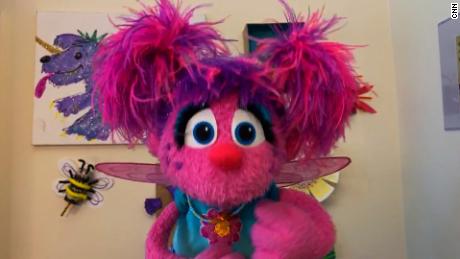
Abby Cadabby shares a personal story
Part 2: Entire CNN/Sesame Street town hall on racism16:16
Sesame Street's Abby Cadabby shares a story about how her fellow Sesame Street friend Big Bird was a victim of prejudice, and how she stood up for him. A college professor defines white privilege.
The Greater Good Science Center studies the psychology, sociology, and neuroscience of well-being and teaches skills that foster a thriving, resilient, and compassionate society. Their online Greater Good magazine turns scientific research into stories, tips, and tools.
After yet another week, I thought it wise to revisit this article that they published way back in March when we were weary -- but not yet quite this weary! May we remember that it is a privilege to even be safely sheltered at home and asking these questions. Check in with yourself and then help your child ask similar questions. 1. What am I grateful for today?
2. Who am I checking in on, or connecting with, today?
3. What expectations of “normal” am I letting go of today?
4. How am I getting outside today?
5. How am I moving my body today?
6. What beauty am I creating, cultivating, or inviting in today?
As we continue into this long phase of remote learning, I thought these key tips from the Center on the Developing Child are worth noting and incorporating into our daily routines.
The coronavirus outbreak has changed many things about our daily lives. But even during this uncertain time, it’s a sure thing that our children are still learning, growing, and developing.
Everyone can help support a child’s healthy development (and it may even help relieve your stress!). Just a few minutes and some simple, free activities can make a difference.
Practice "Serve and Return"
Practice “serve and return,” or back-and-forth interaction with your little ones. Even before they learn to talk, infants and children reach out for attention—babbling, gesturing, or making faces. When young children “serve up” a chance to engage with them, it’s important to “return” with
What helps us get through tough times? Going back to basics like focusing on healthy habits is one place to start. Practicing self-care, being a compassionate witness, and teaching your children these same skills builds resilience in all of us.
Getting outside and experiencing the natural world?
Investing time to nurture important relationships?
Limiting news media and social media?
Taking time to unwind and doing something you enjoy?
Practicing kindness and gratitude?
Washing your hands!
The benefits of practicing kindness and gratitude are well documented. As we have taught the children, it is absolutely true that "when we fill someone else's bucket, we fill our own bucket too." Please cuddle up with your child and enjoy "Have You Filled a Bucket Today?" read by the author, Carol McCloud.
These are the same strategies that we teach our students when we're in class together. Daniel Siegel, MD, is a clinical professor of psychiatry at the UCLA School of Medicine and executive director of the Mindsight Institute. If you're interested in learning more, go to his website at drdansielgel.com
"For families concerned that their children are missing out on academic content, remember that at a time like this, less is more. I encourage you to broaden your definition of learning and focus on playtime, downtime, and family time." This message from Dr. Denise Pope, a Senior Lecturer at Stanford University Graduate School of Education and of a Co-Founder of Challenge Success rings true.
A Message to our Challenge Success Family during COVID-19
During these uncertain times with school closures and significant shifts away from normal routines, many people have expressed concerns about the impact on students’ academic journeys. I want to encourage parents, educators, and students in the Challenge Success family to remember the big picture. This is a time to focus on — and be grateful for — your
I encourage you to listen to this compelling podcast. This is the work we're doing at Mitchell School but we need the help of the entire community. Also check out the Jesse Lewis Choose Love Movement
Most kidsvalue success and achievementmore than caring for others, according to Harvard'sMaking Caring Commonproject. Who is to blame? We are. We talk to Scarlett Lewis of the Jesse Lewis Choose Love Movement; Jennifer Kotler Clarke, vice president of content research and evaluation at Sesame Workshop; and Thomas Lickona, author ofHow To Raise Kind Kids, for some ideas on how to do better, and why.
Here's what to remember:
Children are born to be kind — but also unkind.
Kindness requires courage.
To build kindness, practice mindfulness.
Teach real apologies, and frame forgiveness as a gift you give yourself.
Practice gratitude to "raise the capital" of everyday kindness.
Kindness is a habit; rituals, chores and service can all help.
One in three children will experience clinically a significant anxiety disorder before adulthood. Unless treated, many will become anxious adults.
“There are currently two evidence-based treatments for anxiety — medication and cognitive behavioral therapy,” said Eli Lebowitz, associate director of the Anxiety and Mood Disorders Program at the Yale Child Study Center and lead author of the study. “Yet only half the children respond to these therapies, so there is a great need for alternate treatments.” The new program called SPACE developed at Yale helps parents handle issues arising from living with an anxious child.
Parents of anxious children almost always try to accommodate their child, Lebowitz said. For instance, if the child suffers from social anxiety, no friends are invited to the house; in the case of separation anxiety, parents sleep with the child or never leave the home. Parents constantly reassure a child with generalized anxiety. While the responses of parents are natural, studies have shown they also leave children suffering from debilitating anxiety into adulthood, Lebowitz said.
Researchers randomly assigned 124 children ages 7 to 14 with diagnosed anxiety disorders to either receive cognitive behavioral therapy or their parents were enrolled in 12 weekly counseling sessions to help them better cope with the anxious child. For instance, a parent assigned to SPACE gradually reduced the dozens of text messages a day they sent their child to two or three. Parents who repeatedly kept their child out of school because of anxiety-related stomach aches learned to say, “I know you are feeling upset right now, but I know you will be okay” and sent their child to school.
Both approaches were equally efficacious in reducing anxiety symptoms in children and stress levels of parents, researchers found. “Accommodating’’ behavior by parents was substantially reduced among those who received SPACE counseling.
Lebowitz said he hopes to train therapists to offer the program now that its efficacy has been established. But what parents shouldn’t do is ignore the problem, he cautions.
“Severe anxiety is a serious condition which damages children, disrupts family life, and in some cases leads to suicide,” he said.
Wendy K. Silverman, the Alfred A. Messer Professor in the Child Study Center and professor of Psychology, is senior author of the study.
The research was primarily funded by the National Institute of Mental Health.
On Monday evening, former Chief Justice of the NH Supreme Court, John Broderick, spoke at the Star Theater at the Kittery Community Center. On Tuesday he addressed the students and staff of Traip Academy. His message was powerful and necessary.
Please take a moment to learn more about the REACT Awareness Campaign and how you can recognize the 5 signs of mental illness.
If you didn't have a chance to come to hear him speak, you can watch one of his presentations that is available on YouTube.
R.E.A.C.T. Awareness Campaign
Dartmouth-Hitchcock's R.E.A.C.T. Mental Health Awareness Campaign provides students throughout New Hampshire and Vermont with tips to deal with signs of emotional suffering and resources for support and help.
The R.E.A.C.T campaign was developed to provide clear next steps to take when someone sees some, or all, of the five signs of emotional suffering in another person. R.E.A.C.T supplements the Five Signs campaign developed by Barbara Van Dahlen of Change Direction. The idea for the 5 Signs was modeled on the theory that, like knowing the 5 Signs of a heart attack or stroke, we should all know the 5 Signs of emotional distress; and when we see those signs we should take action.
Led by Senior Director of Public Affairs John Broderick, formerly the Chief Justice of the NH Supreme Court, and in collaboration with the Children's Hospital at Dartmouth-Hitchcock, the New Hampshire Department of Education, the Vermont Agency of Education and other agencies and civic leaders across both states, Broderick has been reaching out to high school students, educators, parents and professionals to change the conversation on mental health and to help reduce stigma.
Broderick believes that students "have the ability to change the culture and the way mental health is viewed." He wants to spread this message to as many students, educators, parents and professionals as he can.
Watch this video from one of Broderick's talks to students at Mascoma Valley Regional High school in Canaan, NH.
If you are interested in learning more about R.E.A.C.T. or to schedule a presentation at your school, please contact: Karen Borgstrom at Karen.J.Borgstrom@hitchcock.org
I encourage you to check out this new podcast in the For the Sake of the Child Podcast Series. It is excellent! 7 C's of Resiliency - Ken Ginsburg
This podcast on the 7 C’s of Resiliency is the first in a monthly series with Dr. Ken Ginsburg, who is the Co-Founder and Director of the Center for Parent and Teen Communication, author of Building Resilience in Children and Teens and Raising Kids to Thrive, a pediatrician specializing in Adolescent Medicine, and a Professor of Pediatrics. He is also Director of Health Services at covenant House Pennsylvania, where he serves Philadelphia’s homeless and marginalized youth. Listen in to learn more about how you can raise a resilient child.
Keep the news away. Turn off the TV and radio news at the top of the hour and half hour. Read the newspaper out of range of young eyes that can be frightened by the pictures (kids may respond strongly to pictures of other kids in jeopardy). Preschool kids don't need to see or hear about something that will only scare them silly, especially because they can easily confuse facts with fantasies or fears.
Stress that your family is safe. At this age, kids are most concerned with your safety and separation from you. Try not to minimize or discount their concerns and fears, but reassure them by explaining all the protective measures that exist to keep them safe. If the news event happened far away, you can use the distance to reassure kids. For kids who live in areas where crime and violence is a very real threat, any news account of violence may trigger extra fear. If that happens, share a few age-appropriate tips for staying and feeling safe (being with an adult, keeping away from any police activity).
Be together. Though it's important to listen and not belittle their fears, distraction and physical comfort can go a long way. Snuggling up and watching something cheery or doing something fun together may be more effective than logical explanations about probabilities.
What is the purpose of summer break? In the 19th century, historians say, rural schools operated on an agrarian schedule that saw schools closed during spring and fall and open for summer and winter terms. Urban schools were also open during the summer (and for many more days than schools are today), but attendance was optional. Schools were often sweltering, and, with ill-founded concerns about health risks, the concept of summer vacation arose, first among wealthy urban families and later middle-class parents and school administrators. In the early 20th century, following a push to standardize school calendars, the tradition of summer break took hold, as historian Kenneth Gold described in his 2002 book School's In: The History of Summer Education in American Public Schools.
That fascinating history, of course, has very little to do with the way we live today, as Denise Pope describes in a conversation recorded for the Harvard EdCast (see below). Most parents have to work for most of the summer, and our schedules typically don’t correspond to school calendars at all, says Pope, a senior lecturer at the Stanford Graduate School of Education. So the question of why we have a summer break — and what we are supposed to do with it — becomes different and more nuanced.
For many parents, summer presents a child-care problem, first and foremost, and so we turn to camps to solve it. But the notion of camp, too, has changed; increasingly, parents are enrolling kids in structured, academically aligned enrichment activities. Although well intentioned, these activities may limit kids’ access to the free time, the downtime, and the child-centered play they desperately need for healthy development, says Pope.
Kids (and parents) lead increasingly busy lives during the school year, Pope says, and that same frenetic pace now often pervades the summer. She encounters these stresses as part of her work with Challenge Success, a project she co-founded to help educators and parents retain and restore balance in children’s achievement-oriented lives.
“We’re looking at summer with that same lens of, How do we keep them busy? Is more better? It must be, because this is how we do it in the school year,” says Pope. “But it’s actually quite the opposite of what we know in terms of child wellbeing. We know that kids need a break. They need time for free, unstructured play. They need downtime. They need time to be not in an adult-driven or an adult-led situation; they need time for kids to lead and take initiative and create their own games and play and be with nature.” A nonacademic summer camp may provide all of those elements, Pope’s research with Challenge Success has shown.
There’s nothing wrong with summer enrichment in and of itself, Pope says — and if your child is legitimately interested in coding or robotics or theater, then it’s great if you can provide opportunities to further that interest. But “give the child some choice and some voice in the matter,” Pope says, and know that “for the majority of kids, they don’t need a particular planned, one-that-costs-money enrichment activity.”
Instead, parents can develop kids’ interests through trips to the library, or by creating a reading challenge (allowing them to select the books they read) and encouraging them to keep a journal where they record their opinions of the books. “Even just giving them a list of chores” can be enriching, Pope says. And since “enrichment” includes play, establish a regular weekday basketball game with neighborhood kids, for example; get a group together and see if parents can rotate taking an afternoon off to be home to supervise. Or ask your kids to help plan a local outing over the weekend, taking advantage of free days at the museum or free walks around historical sites. “You can create summer enrichment opportunities in lots of different ways,” Pope says.